Ethical Leadership in the Age of Artificial Intelligence
Fiduciary oversight, algorithmic accountability and governance in practice
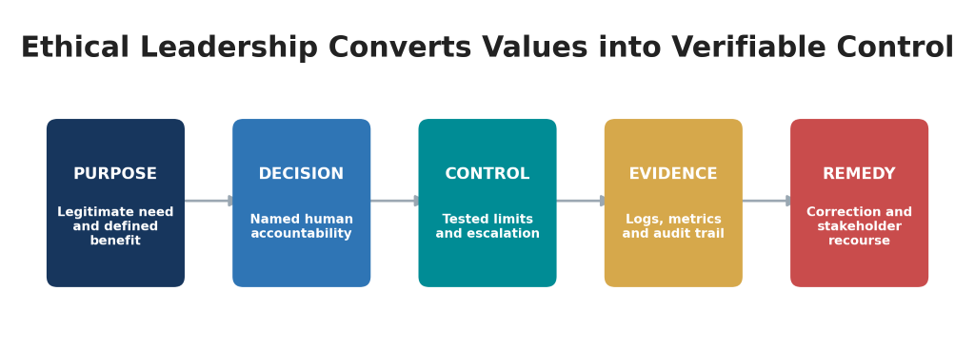
Figure 1 The ethical control chain from purpose to remedy
September 2026
Executive Summary
Artificial intelligence is already influencing credit, recruitment, pricing, customer service, compliance, maintenance, document processing and executive analysis. The board’s central question is therefore no longer whether the enterprise uses AI. It is whether the enterprise can identify where AI is used, explain the decisions it shapes, intervene when it fails, and provide remedy when people or the business are harmed.
Ethical leadership gives those questions an operating structure. It connects values to decision rights, controls, evidence and consequences. A policy may declare fairness or transparency, but leadership becomes credible only when a named executive owns the outcome, staff know when to challenge the system, vendors provide sufficient evidence, and the board receives reliable information about incidents, exceptions and residual risk.
My own experience across the Indian Air Force, large telecom networks, multi-site infrastructure and document-management operations has reinforced a simple lesson: a control that exists only in a manual does not protect the organization. Sustainable performance comes from disciplined execution. I apply that principle to AI through an Analyze Act Adhere loop: assess purpose and exposure, install proportionate controls, and verify adherence continuously.
1 Ethical Leadership as an Operating Responsibility
Ethics in AI is sometimes treated as a statement of intent owned by legal, technology or corporate communications. That approach separates values from operations. AI risk enters the enterprise through procurement, data access, workflow design, employee behaviour, vendor updates and the pressure to deliver faster. Ethical leadership must therefore operate across the same system.
A responsible leader does not need to become a data scientist. The leader must, however, understand the business decision delegated to the system, the people who may be affected, the limits of the evidence, and the conditions under which human intervention is mandatory. Delegation may change who performs an activity; it does not remove management or board accountability for the result.
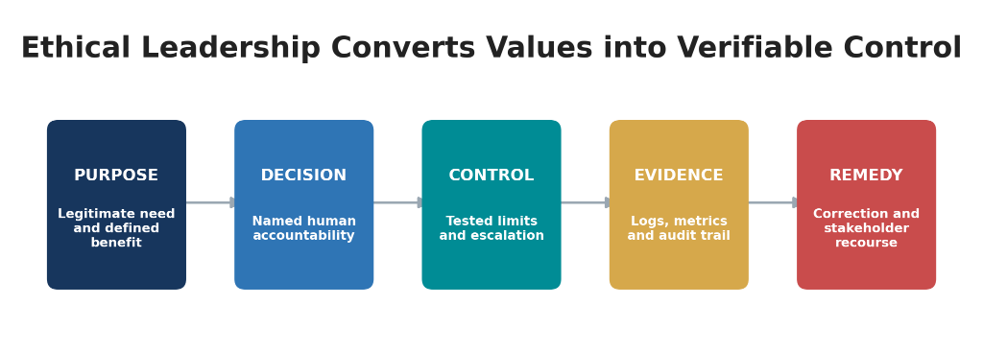
Figure 2 Values become governable when each principle is linked to ownership, control, evidence and remedy
2 What the Evidence Says About Adoption and Trust
The strongest recent global evidence shows adoption moving faster than confidence and organizational discipline. The 2025 KPMG and University of Melbourne study surveyed 48,340 people in 47 countries. It reported that 66 percent used AI regularly and 83 percent believed AI could produce benefits, while 58 percent were unwilling to trust AI. In the workplace sample, 58 percent intentionally used AI for work and 48 percent reported uploading company information to public AI tools. These measures describe different behaviours; they should not be combined into a single “trust score.” [1]
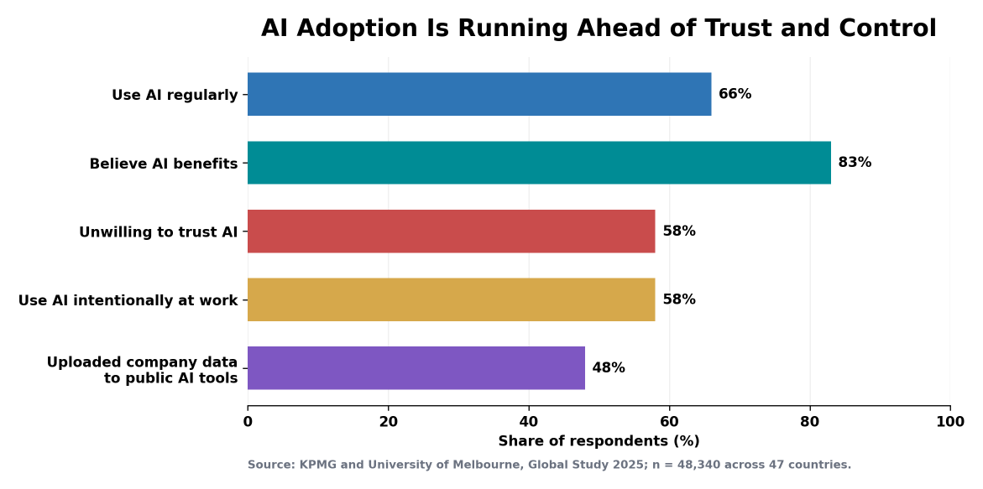
Figure 3 Selected global adoption, trust and workplace-use findings from the 2025 study
A separate ADP Canada workplace study illustrates the gap between stated priority and implemented policy. It found that 46 percent of surveyed businesses considered ethical management of AI a priority, yet only 22 percent had established an AI ethics policy; 21 percent reported using AI for compliance functions. The evidence is country-specific, but the management lesson is widely relevant: concern does not become control until it is translated into policy, ownership, training and monitoring. [2]
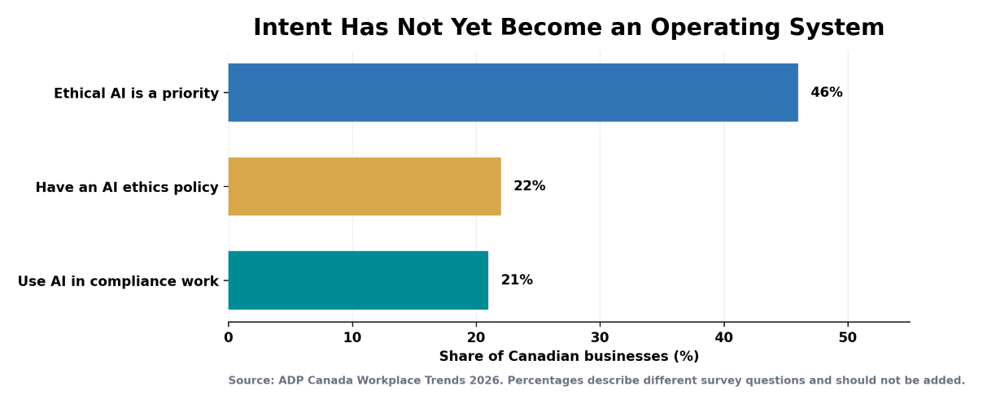
Figure 4 Ethical intention and formal governance remain materially different measures
3 The Leadership Failure Modes
Three failure modes help leaders distinguish prudent adoption from technology enthusiasm. Disuse occurs when an organization leaves suitable repetitive work untouched and keeps skilled people trapped in avoidable administration. Misuse occurs when AI is applied to a task for which its data, design or reliability are inadequate. Overuse occurs when the tool may accelerate a task but weakens professional judgment, organizational learning or resilience.
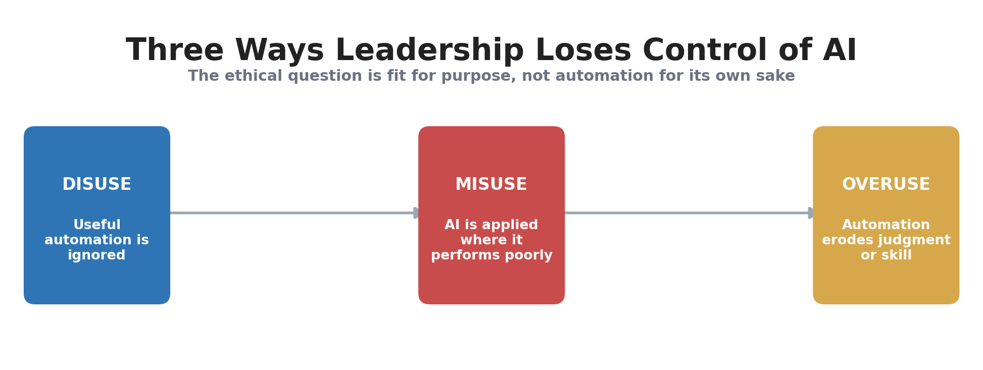
Figure 5 Disuse, misuse and overuse require different leadership responses
Automation bias intensifies misuse and overuse. People may omit action because the system did not flag a problem, or commit an error by following a recommendation despite contrary evidence. A human-in-the-loop label is insufficient if the reviewer lacks time, authority, information or competence. Effective review requires a qualified human who can challenge the output, stop the process and record the reason.
4 The Analyze Act Adhere Ethical AI Framework
I use Analyze Act Adhere as an execution discipline because AI governance fails when organizations move directly from enthusiasm to deployment. The framework places five ethical tests across the full lifecycle: accountability, fairness, privacy, transparency and sustainability. These principles are consistent with the direction of the OECD AI Principles, NIST AI Risk Management Framework and ISO IEC 42001, while the three-step loop makes them usable in operating reviews. [3] [4] [5]
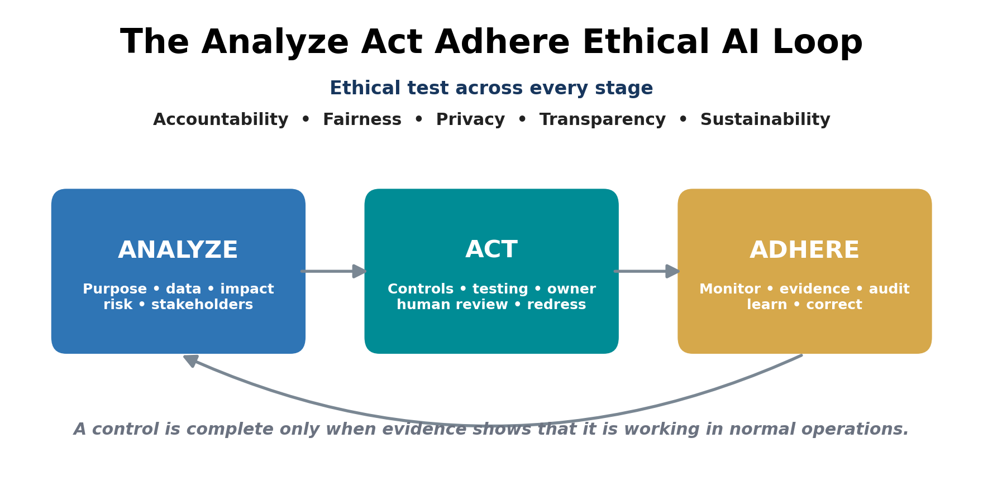
Figure 6 The author’s Analyze Act Adhere framework applied to ethical AI
Accountability identifies the person with authority over the business outcome. Fairness tests whether performance and impact differ materially across relevant groups. Privacy limits collection, access, retention and secondary use. Transparency provides an explanation appropriate to each stakeholder. Sustainability considers energy, workforce capability, supplier dependence and long-term operating resilience. None of these can be settled once at launch; model, data and context change.
5 Board Oversight Without Micromanagement
Boards should govern AI as a portfolio of business risks, not as a catalogue of technical models. Management owns design and operation. The board approves risk appetite, tests whether authority and information flows are adequate, challenges material exceptions, and seeks assurance that controls work. This distinction protects oversight from becoming either passive or operationally intrusive.
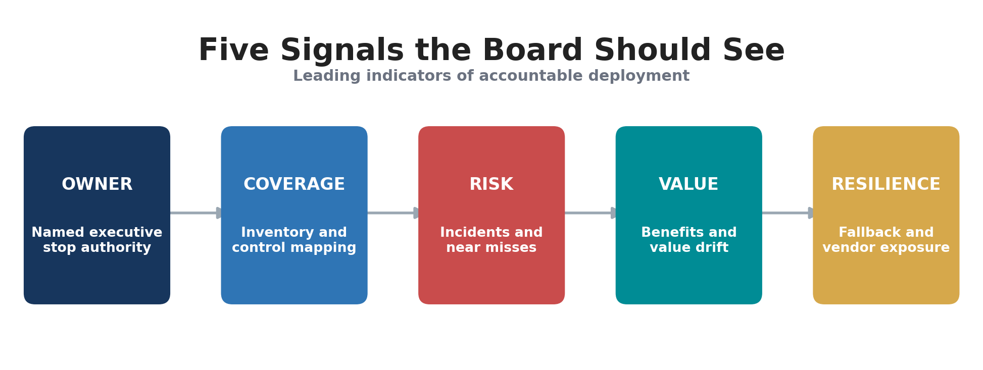
Figure 7 A compact board dashboard should emphasize leading accountability signals
A useful dashboard shows trend, threshold, owner and corrective action. Accuracy alone is inadequate. A model can remain statistically accurate while generating unfair outcomes, leaking confidential information, degrading employee capability or depending on a supplier the enterprise cannot replace. Near-miss reporting deserves particular attention: a sudden decline may reflect weaker reporting rather than safer performance.
6 Explainability Human Oversight and Redress
Explainability should be matched to the decision and the audience. A board or regulator needs lineage, validation, limitations and aggregate performance. A risk manager needs stress tests and boundary conditions. A developer needs feature and error diagnostics. An affected customer or employee needs a clear reason, a practical way to challenge the decision, and a human response with authority to correct it.
Interpretable models such as decision trees or constrained rule systems can provide structural clarity. More complex models may use post-hoc methods such as SHAP, LIME, counterfactual explanations or partial-dependence analysis. These methods can assist understanding, but an explanation is not proof that the model is fair, correct or causal. Leaders should test the explanation method itself and retain documentation of its limitations.
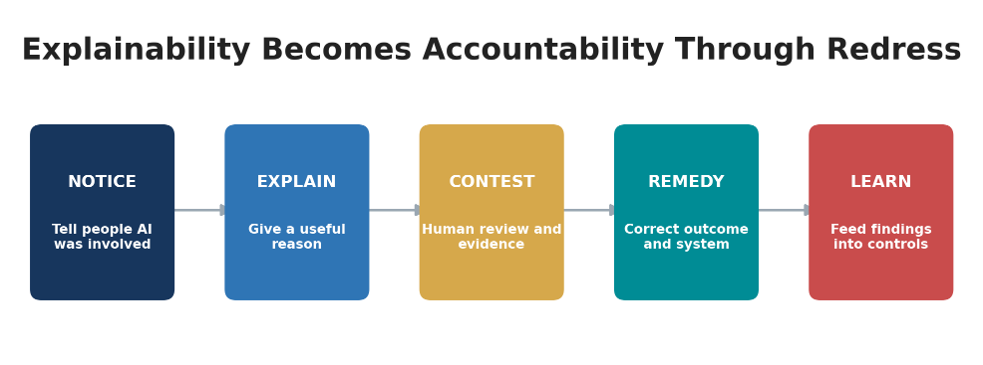
Figure 8 Redress closes the loop between explanation and accountability
7 Regulatory and Standards Landscape
The global regimes differ in legal force, but their control expectations increasingly converge. NIST AI RMF organizes voluntary risk management around Govern, Map, Measure and Manage. ISO IEC 42001 provides requirements for an organizational AI management system. The EU AI Act imposes binding, risk-based duties, including requirements for high-risk systems concerning risk management, data governance, documentation, logging and human oversight. [3] [4] [6]
India’s 2025 AI Governance Guidelines emphasize coordinated, risk-based governance and reliance on existing legal and sectoral mechanisms. In financial services, the Reserve Bank of India’s FREE-AI report set out principles and recommendations for responsible and ethical enablement. Australia’s guidance evolved from ten voluntary guardrails to six essential practices for safe and responsible adoption. These instruments should be mapped to the organization’s jurisdictions and use cases rather than copied into a generic policy. [7] [8] [9]
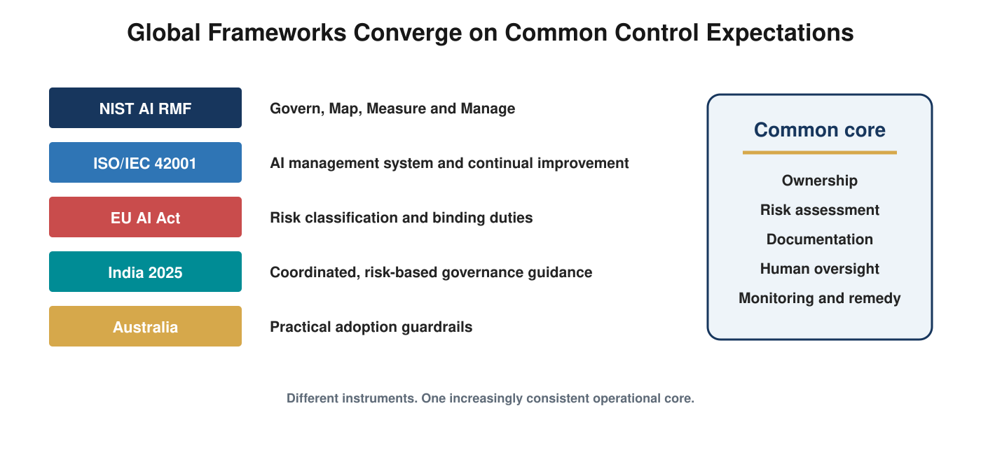
Figure 9 Different instruments converge on a common operational core
8 A First Year Implementation Roadmap
An enterprise does not need to solve every ethical question before it begins. It does need to identify material exposure quickly and stop uncontrolled growth. The first 90 days should establish an inventory, classify use cases, name owners and issue clear rules for public tools and confidential data. The next phase should deepen impact assessment, testing, contractual accountability and redress. By the end of the first year, the organization should be able to demonstrate independent assurance, board reporting and tested fallback arrangements.
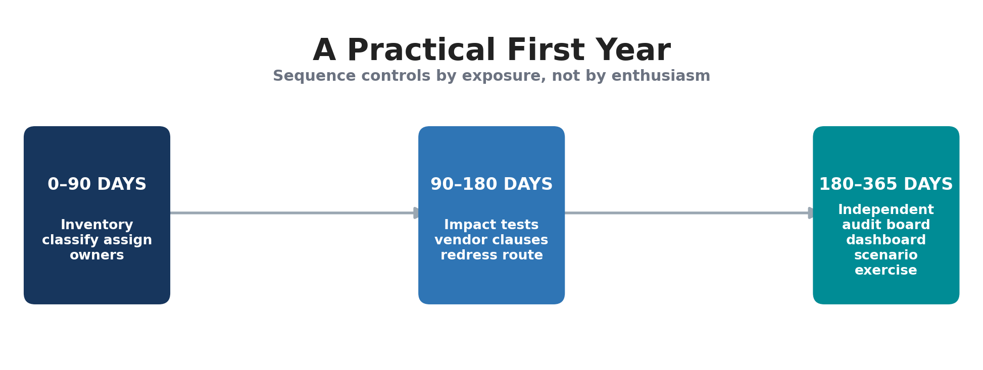
Figure 10 A sequenced first-year implementation plan
Conclusion
Ethical leadership in AI is the discipline of remaining accountable when technology makes decisions faster, at greater scale and with less visible reasoning. The board must be able to trace each material use case from purpose to owner, from control to evidence, and from adverse outcome to remedy. Management must preserve the ability of qualified people to question, stop and correct the system.
The principles are familiar to anyone who has led safety-critical or service-critical operations. Standards matter, but adherence determines the result. My experience has taught me that operational resilience is built through clear responsibility, disciplined review, evidence and timely correction. Applied to AI, that same approach allows innovation to proceed without asking employees, customers or directors to accept blind trust.
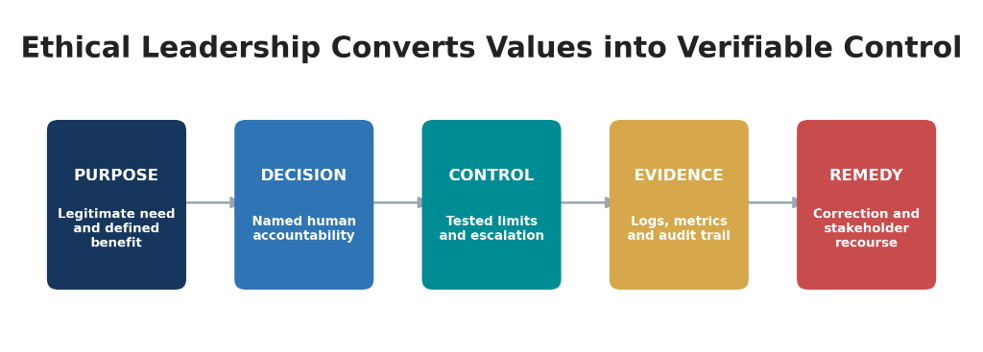
Figure 11 The closing test for ethical leadership is whether the organization can prove control and provide remedy
Board Discussion Checklist
About the Author
Salman Ahmad Siddiqui
Independent Director Aspirant | Governance Led Operational Transformation Strategist
Salman Ahmad Siddiqui is an Indian Air Force veteran, Founder and CEO of SyhaConnect Innovations, and an ILA-certified corporate trainer and enterprise coach. He brings more than three decades of leadership experience across telecom infrastructure, technology operations, multi-site execution and document-management operations. His work focuses on governance-led operational transformation, operational resilience, SLA discipline, accountability systems and the conversion of policy into sustained execution through his Analyze Act Adhere framework.
Email: syhaconnect@gmail.com | LinkedIn: www.linkedin.com/in/salman-siddiqui-38442236 | Website: www.syhaconnect.in
Sources
[1] KPMG and University of Melbourne. Trust attitudes and use of artificial intelligence A global study 2025. https://kpmg.com/xx/en/our-insights/ai-and-technology/trust-attitudes-and-use-of-artificial-intelligence.html
[2] ADP Canada. Canada workplace trends for 2026. https://www.adp.ca/en/resources/articles-and-insights/articles/c/canada-workplace-trends.aspx
[3] National Institute of Standards and Technology. Artificial Intelligence Risk Management Framework AI RMF 1.0. January 2023. https://www.nist.gov/itl/ai-risk-management-framework
[4] International Organization for Standardization. ISO IEC 42001 Artificial intelligence management system. https://www.iso.org/standard/81230.html
[5] OECD. OECD AI Principles updated 2024. https://oecd.ai/en/ai-principles
[6] European Commission. AI Act regulatory framework. https://digital-strategy.ec.europa.eu/en/policies/regulatory-framework-ai
[7] Ministry of Electronics and Information Technology Government of India. India AI Governance Guidelines. November 2025. https://www.meity.gov.in/content/india-ai-governance-guidelines
[8] Reserve Bank of India. Framework for Responsible and Ethical Enablement of Artificial Intelligence FREE-AI. August 2025. https://www.rbi.org.in/
[9] Australian Government Department of Industry Science and Resources. Guidance for AI Adoption. October 2025. https://www.industry.gov.au/publications/guidance-ai-adoption
[10] Kandasamy U C. Ethical Leadership in the Age of AI Challenges Opportunities and Framework. arXiv 2410.18095. https://arxiv.org/abs/2410.18095
[11] European Corporate Governance Institute. The Board Monitoring Function Artificial Intelligence in the Era of Heightened Accountability. Law Working Paper 856 2025. https://www.ecgi.global/
[12] Cambridge Forum on AI Law and Governance. Toward empowering AI governance with redress mechanisms. 2025. https://www.cambridge.org/core/journals/cambridge-forum-on-ai-law-and-governance